Pages

Showing posts with label mithra. Show all posts

Sunday, June 19, 2011

Sunday: Can You Tell the Difference Between Mithra and Jesus?

Mithra and Jesus I Can't Tell the Difference Can you?

Take this quiz.  See can you tell the difference between Mithra and Jesus.  What is really mind boggling is that I guarantee your minister / pastor / bishop / priest has no clue about this.  The cover up is so old that even they don't know about it.  But, I seriously want you to see if you can tell the difference between them.  Keep in mind that Mithra was already 5,000 years old before Jesus suddenly appears out of nowhere.  And, Mithra was the state religion of Rome.  All celebrations were to Mithra.  Now, take the quiz and see if you can tell a difference between Mithra and Jesus.

Happy Sun day!


Mithra vs Jesus Quiz


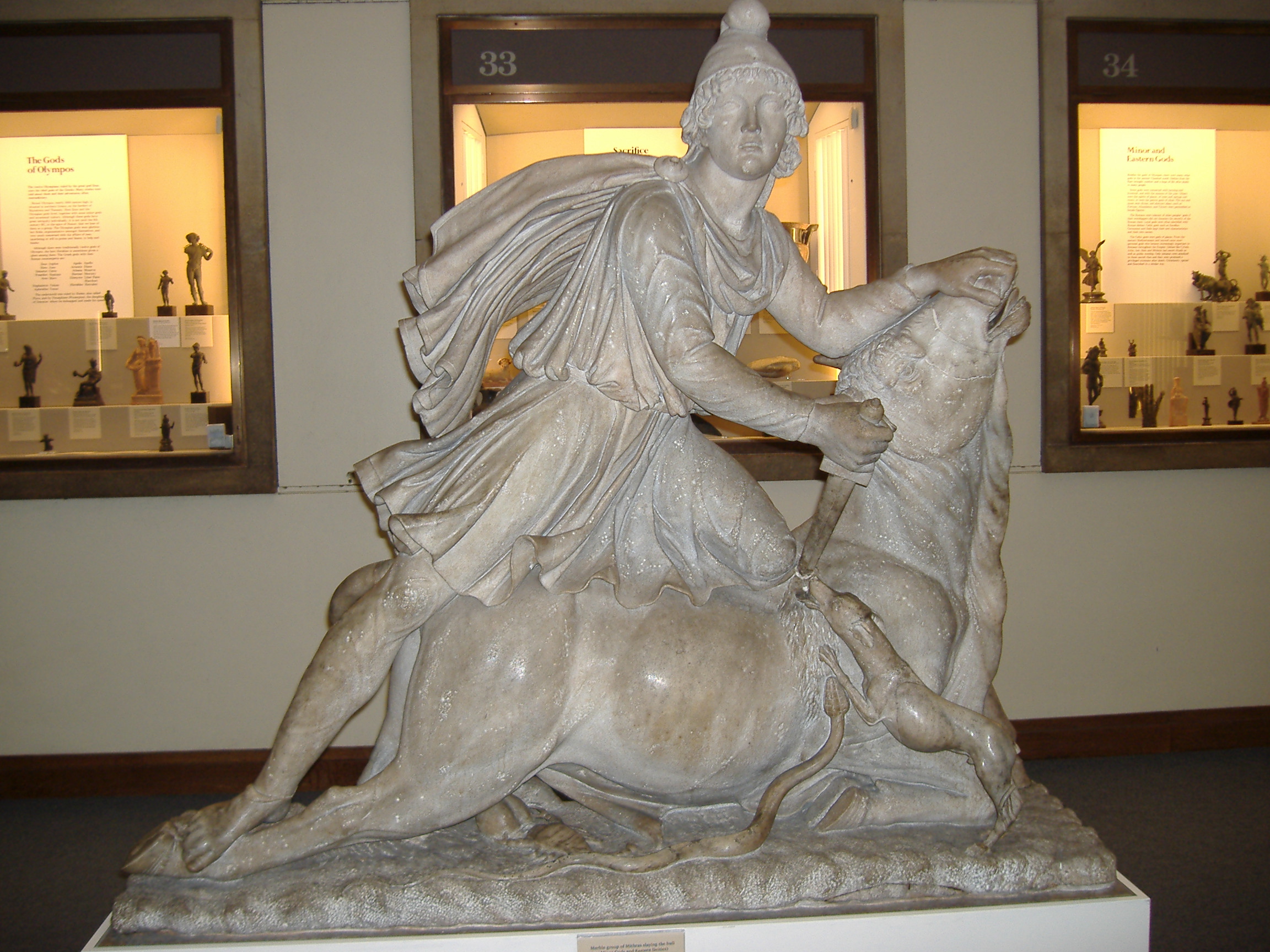
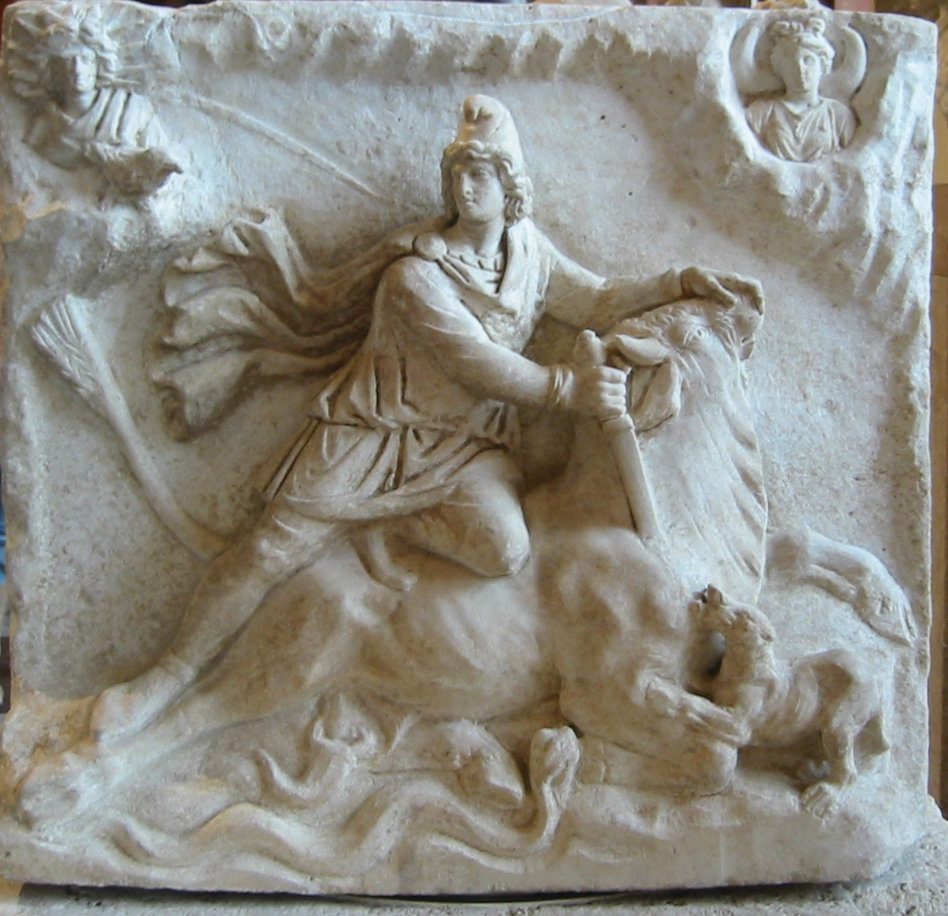
Mithra Slays the Bull Who's Blood Gives Life
Jesus was born to The Blessed Virgin Mary in a stable in Bethlehem.
Mithra was born to the Blessed Virgin Myrrha in a stable (some tales state a cave, with these conflicting accounts we can't say for sure) in Bethlehem.

As per Legend Three wise men from the East bought gifts of Gold, Frankincense and Myrrh at Jesus birth
As per Legend Three wise men from the East bought gifts of Gold, Frankincense and Myrrh at Mithras birth

Jesus' Birth is celebrated between December 25 and January 6.
Mithras Birth is celebrated between December 25 and January 6.

Jesus had Twelve Disciples .
Mithra had twelve Disciples - symbolic of the Zodiac.

Mithra with Lamb on His Shoulders
Jesus resurrection is celebrated every year. on Easter, at which time he was resurrected.
Mithra resurrection was celebrated every year. His principal festival on what was later to become Easter.

Jesus and Mithra were both buried in a tomb and resurrected after three days.
In both religions this is referred to as The Three days of Darkness.

Before being crucified Jesus had his Last Supper with his twelve disciples
Before returning to heaven, Mithra had his Last Supper with his twelve disciples, representing the twelve signs of the zodiac.

Catholics engage in a ritual Eucharist signed by a cross.
Mithraists engaged in a ritual Eucharist signed with a cross.

Catholics Celebrate a Mass in which they drink wine and eat bread to symbolize the body and blood of Jesus.
Mithraists Celebrated a Myazda in which they drank wine and ate bread to symbolize the body and blood of Mithra.

Lamb, Mithra, 2 Fish
Purification through a ritualistic baptism was required of the faithful in both religions.

Jesus was identified with the Lamb & at times the Lion
Mithra was identified with the Lamb & at times the LionThe Mithraic Holy father wore a red cap and garment and a ring, and carried a shepherd's staff
The Pope wears a red cap and garment and a ring and carries a shepherds staff.

Priests of Mithraism bore the Title father.
Catholic priests bear the Title Father - despite Jesus specific proscription of the acceptance of such a title

An inscription in the Vatican states , "He who will not eat of my body, nor drink of my blood, so that he may be one with me and I with him, shall not be saved." This inscription is from the remains of the temple the Vatican was built over, a temple dedicated to Mithras.

Jesus is depicted with a Halo - Mithra is depicted with a Halo. Halo has synonymous meanings and relates to "The Light"
Both were referred to as "The light of the World."

Birth of Sun God Mithra, All Were Celebrated on Dec 25th
Roman Emperor Constantine, who made Christianity legal throughout Rome, was a worshipper of Sol Invictus/ the invincible Sun. Sol Invictus is an amalgamation of trans-cultural solar deities including Mithras, and Apollo. Constantine recognized Jesus' status in that pantheon almost immediately. Many of the Stories of his life and activities are symbolic of celestial events.

In modern times, ancient solar symbols are plentiful in Christianity .


Heaven and Hell


  • The worshippers of Mithras held strong beliefs in a celestial heaven and an infernal hell. 
  • They believed that the benevolent powers of the God would sympathize with their suffering and grant them the final justice of immortality and eternal salvation in the world to come. 
  • They looked forward to a final day of judgment in which the dead would resurrect, and to a final conflict that would destroy the existing order of all things to bring about the triumph of light over darkness. 
  • There is basically very little difference between the beliefs of the two systems, in respect to their concepts of Heaven, Hell and purgatory. 

Many of the Catholic and Orthodox beliefs, and legends that do not arise out of the Bible or Apocrypha have their roots in Mithraism and related Pagan belief systems.


Please visit my legal website: Nevada DUI Attorneys
See me on YouTube: Seattle Cop Punches Black Teenage Girl


Sunday: Are You Worshiping Mithras?

Are You Worshiping Mithras?

I am sure Christians reading this are going to bury their head in the sand and think we are simply being blasphemous.  But, we present to you complete facts of where your religion actually comes from.  We have researched long and hard to figure out where Christianity came from.  The original church, the Catholic church, seems anything BUT holy and more a political branch for some hidden agenda.  With very little effort and putting forth just the basic facts everyone agrees on of what do Christians believe, up pops the god Mithra or Mitra.  As you keep reading you'll find that there never was a Jesus Christ and the entire religion is stolen and simply renamed Christianity.  Mithraism is then called pagan.  The end question is why rename a religion that celebrates and believes in the same exact thing?  For that answer, you'll have to wait till next week.  Here I present to you everything Mithraism is.  If you are not convinced after reading this, that you are actually a worshiper of Mithra, then you're just an IMBECILE.

Mithra Slaying the Bull
Imbecile: A person of moderate to severe mental retardation having a mental age of from three to seven years and generally being capable of some degree of communication and performance of simple tasks under supervision.


The Vatican was built upon the grounds previously devoted to the worship of Mithra (600 B.C.). The Orthodox Christian hierarchy is nearly identical to the Mithraic version. Virtually all of the elements of Orthodox Christian rituals, from miter, wafer, water baptism, alter, and doxology, were adopted from the Mithra and earlier pagan mystery religions. The religion of Mithra preceded Christianity by roughly six hundred years. Mithraic worship at one time covered a large portion of the ancient world. It flourished as late as the second century. The Messianic idea originated in ancient Persia and this is where the Jewish and Christian concepts of a Savior came from. Mithra, as the sun god of ancient Persia, had the following karmic similarities with Jesus:

  1. Mithra was born on December 25th as an offspring of the Sun. Next to the gods Ormuzd and Ahrimanes, Mithra held the highest rank among the gods of ancient Persia. He was represented as a beautiful youth and a Mediator. Reverend J. W. Lake states: "Mithras is spiritual light contending with spiritual darkness, and through his labors the kingdom of darkness shall be lit with heaven's own light; the Eternal will receive all things back into his favor, the world will be redeemed to God. The impure are to be purified, and the evil made good, through the mediation of Mithras, the reconciler of Ormuzd and Ahriman. Mithras is the Good, his name is Love. In relation to the Eternal he is the source of grace, in relation to man he is the life-giver and mediator" (Plato, Philo, and Paul, p. 15).
  2. He was considered a great traveling teacher and masters. He had twelve companions as Jesus had twelve disciples. Mithras also performed miracles.
  3. Mithra was called "the good shepherd, "the way, the truth and the light, redeemer, savior, Messiah." He was identified with both the lion and the lamb.
  4. Mithra Slaying Bull - British Museum
  5. The International Encyclopedia states: "Mithras seems to have owed his prominence to the belief that he was the source of life, and could also redeem the souls of the dead into the better world ... The ceremonies included a sort of baptism to remove sins, anointing, and a sacred meal of bread and water, while a consecrated wine, believed to possess wonderful power, played a prominent part."
  6. Chambers Encyclopedia says: "The most important of his many festivals was his birthday, celebrated on the 25th of December, the day subsequently fixed -- against all evidence -- as the birthday of Christ. The worship of Mithras early found its way into Rome, and the mysteries of Mithras, which fell in the spring equinox, were famous even among the many Roman festivals. The ceremonies observed in the initiation to these mysteries -- symbolical of the struggle between Ahriman and Ormuzd (the Good and the Evil) -- were of the most extraordinary and to a certain degree even dangerous character. Baptism and the partaking of a mystical liquid, consisting of flour and water, to be drunk with the utterance of sacred formulas, were among the inauguration acts."
  7. Prof. Franz Cumont, of the University of Ghent, writes as follows concerning the religion of Mithra and the religion of Christ: "The sectaries of the Persian god, like the Christians', purified themselves by baptism, received by a species of confirmation the power necessary to combat the spirit of evil; and expected from a Lord's supper salvation of body and soul. Like the latter, they also held Sunday sacred, and celebrated the birth of the Sun on the 25th of December.... They both preached a categorical system of ethics, regarded asceticism as meritorious and counted among their principal virtues abstinence and continence, renunciation and self-control. Their conceptions of the world and of the destiny of man were similar. They both admitted the existence of a Heaven inhabited by beatified ones, situated in the upper regions, and of a Hell, peopled by demons, situated in the bowels of the Earth. They both placed a flood at the beginning of history; they both assigned as the source of their condition, a primitive revelation; they both, finally, believed in the immortality of the soul, in a last judgment, and in a resurrection of the dead, consequent upon a final conflagration of the universe" (The Mysteries of Mithras, pp. 190, 191).
  8. Reverend Charles Biggs stated: "The disciples of Mithra formed an organized church, with a developed hierarchy. They possessed the ideas of Mediation, Atonement, and a Savior, who is human and yet divine, and not only the idea, but a doctrine of the future life. They had a Eucharist, and a Baptism, and other curious analogies might be pointed out between their system and the church of Christ (The Christian Platonists, p. 240).
  9. In the catacombs at Rome was preserved a relic of the old Mithraic worship. It was a picture of the infant Mithra seated in the lap of his virgin mother, while on their knees before him were Persian Magi adoring him and offering gifts.
  10. He was buried in a tomb and after three days he rose again. His resurrection was celebrated every year.
  11. McClintock and Strong wrote: "In modern times Christian writers have been induced to look favorably upon the assertion that some of our ecclesiastical usages (e.g., the institution of the Christmas festival) originated in the cultus of Mithraism. Some writers who refuse to accept the Christian religion as of supernatural origin, have even gone so far as to institute a close comparison with the founder of Christianity; and Dupuis and others, going even beyond this, have not hesitated to pronounce the Gospel simply a branch of Mithraism" (Art. "Mithra").
  12. Mithra had his principal festival on what was later to become Easter, at which time he was resurrected. His sacred day was Sunday, "the Lord's Day." The Mithra religion had a Eucharist or "Lord's Supper."
  13. The Christian Father Manes, founder of the heretical sect known as Manicheans, believed that Christ and Mithra were one. His teaching, according to Mosheim, was as follows: "Christ is that glorious intelligence which the Persians called Mithras ... His residence is in the sun" (Ecclesiastical History, 3rd century, Part 2, ch. 5).

"I am a star which goes with thee and shines out of the depths." - Mithraic saying


Please visit my legal website: Nevada DUI Attorneys
See me on YouTube: Seattle Cop Punches Black Teenage Girl


Wednesday, March 9, 2011

Pagan Christians: Is Ash Wednesday a Pagan Holiday?

Is Ash Wednesday a Pagan Holiday?


Many Christians are starting to question these "religious" holidays that they are having to pay for, which is the normal origin of their questioning.  "Why am I paying for this holiday?"  "Where did this holiday come from?"  Sounds cynical, I'm sure, but that seems to be the order in which these, so called, Christians question whether something is actually biblical or not.  Well, I am sorry to inform you but Mardi Gras, Ash Wednesday, Lent AND Easter are all satan worship.  I'm sure some of you just spit out your coffee, but sadly it is true.  Read to the end of this article and you'll find the real origin of these.  Also, if you're at all NOT convinced, you have nothing more than to open your own bible and read.  People are going to churches all over the land and getting ashes placed on their foreheads and have no idea what it means, nor where it came from.  Nowhere in the Bible does it say any Rabbi or priest put an ash cross on someone's forehead.  Go look it up.  It is satanic in origin, as is Lent and Easter.  Some people might mistake the message of Christianity in general with the Lent observance of "giving up something" with repentance.  The two are not the same.  And, if you're a Christian only during Lent, then what does that say about you?  Let's get to the proof, shall we?

Pagan Origin


Give me that old time religion
Alexander Hislop wrote:

The forty days' abstinence of Lent was directly borrowed from the worshippers of the Babylonian goddess. Such a Lent of forty days, "in the spring of the year," is still observed by the Yezidis or Pagan Devil-worshippers of Koordistan, who have inherited it from their early masters, the Babylonians. Such a Lent of forty days was held in spring by the Pagan Mexicans, for thus we read in Humboldt, where he gives account of Mexican observances: "Three days after the vernal equinox...began a solemn fast of forty days in honour of the sun." Such a Lent of forty days was observed in Egypt, as may be seen on consulting Wilkinson's Egyptians. This Egyptian Lent of forty days, we are informed by Landseer, in his Sabean Researches, was held expressly in commemoration of Adonis or Osiris, the great mediatorial god. At the same time, the rape of Proserpine seems to have been commemorated, and in a similar manner; for Julius Firmicus informs us that, for "forty nights" the "wailing for Proserpine" continued; and from Arnobius we learn that the fast which the Pagans observed, called "Castus" or the "sacred" fast, was, by the Christians in his time, believed to have been primarily in imitation of the long fast of Ceres, when for many days she determinedly refused to eat on account of her "excess of sorrow," that is, on account of the loss of her daughter Proserpine, when carried away by Pluto...

    Among the Pagans this Lent seems to have been an indispensable preliminary to the great annual festival in commemoration of the death and resurrection of Tammuz, which was celebrated by alternate weeping and rejoicing, and which, in many countries, was considerably later than the Christian festival, being observed in Palestine and Assyria in June, therefore called the "month of Tammuz"; in Egypt, about the middle of May, and in Britain, some time in April. To conciliate the Pagans to nominal Christianity, Rome, pursuing its usual policy, took measures to get the Christian and Pagan festivals amalgamated, and, by a complicated but skilful adjustment of the calendar, it was found no difficult matter, in general, to get Paganism and Christianity--now far sunk in idolatry--in this as in so many other things, to shake hands...

    Let any one only read the atrocities that were commemorated during the "sacred fast" or Pagan Lent, as described by Arnobius and Clemens Alexandrinus, and surely he must blush for the Christianity of those who, with the full knowledge of all these abominations, "went down to Egypt for help" to stir up the languid devotion of the degenerate Church, and who could find no more excellent way to "revive" it, than by borrowing from so polluted a source; the absurdities and abominations connected with which the early Christian writers had held up to scorn. That Christians should ever think of introducing the Pagan abstinence of Lent was a sign of evil; it showed how low they had sunk, and it was also a cause of evil; it inevitably led to deeper degradation. Originally, even in Rome, Lent, with the preceding revelries of the Carnival, was entirely unknown; and even when fasting before the Christian Pasch was held to be necessary, it was by slow steps that, in this respect, it came to conform with the ritual of Paganism. What may have been the period of fasting in the Roman Church before sitting of the Nicene Council does not very clearly appear, but for a considerable period after that Council, we have distinct evidence that it did not exceed three weeks (Hislop A. Two Babylons. pp. 104-106).
Get Your Pagan Calendar Out and Mark Down the Dates
The Salt Lake Tribune - Jan 8, 2008

Although the origins of Carnaval are shrouded in mystery, some believe the fest began as a pagan celebrationof spring’s arrival sometime during the Middle Ages. The Portuguese brought the celebration to Brazil in the 1500s, but it took on a decidedly local flavor by adopting Indian costumes and African rhythms. The word itself probably derives from the Latin “carne vale,” or “goodbye meat,” a reference to the Catholic tradition of giving up meat (and other fleshly temptations) during Lent…

Rio’s first festivals were called entrudos, with locals dancing through the streets in colorful costumes and throwing mud, flour and suspicious-smelling liquids on one another. In the 19th century, Carnaval meant attending a lavish masked ball or participating in the orderly and rather vapid European-style parade. Rio’s poor citizens, bored by the finery but eager to celebrate, began holding their own parades, dancing through the streets to African-based rhythms…

…an event that happens annually in Brazil on the days leading up to Ash Wednesday. In 2008, Carnaval officially begins Friday, Feb. 1, when the mayor gives the keys to the city to King Momo, the portly pleasure-seeker who ushers in the bacchanalia. The next four days are marked by neighborhood parties, lavish masked balls and impromptu fests all over town

Columbia Encyclopedia:

Carnival communal celebration, especially the religious celebration in Catholic countries that takes place just before Lent.

Since early times carnivals have been accompanied by parades, masquerades, pageants, and other forms of revelry that had their origins in pre-Christian pagan rites, particularly fertility rites that were connected with the coming of spring and the rebirth of vegetation.

One of the first recorded instances of an annual spring festival is the festival of Osiris in Egypt; it commemorated the renewal of life brought about by the yearly flooding of the Nile. In Athens, during the 6th cent. BC, a yearly celebration in honor of the god Dionysus was the first recorded instance of the use of a float.

It was during the Roman Empire that carnivals reached an unparalleled peak of civil disorder and licentiousness. The major Roman carnivals were the Bacchanalia, the Saturnalia, and the Lupercalia. In Europe the tradition of spring fertility celebrations persisted well into Christian times, where carnivals reached their peak during the 14th and 15th cent.
Because carnivals are deeply rooted in pagan superstitions and the folklore of Europe, the Roman Catholic Church was unable to stamp them out and finally accepted many of them as part of church activity


Satanic Origin


Mithra is not pagan, he's Satan
Here is what Tertullian of Carthage (in eastern Egypt) noted near the beginning of the third century:

Mithra there, (in the kingdom of Satan,) sets his marks on the foreheads of his soldiers (Tertullian. The Prescription against Heretics, Chapter 40. Translated by Peter Holmes, D.D., F.R.A.S.)

Payam Nabarz wrote in the 21st century:

Tertullian certainly writes that Mithras marks (signat) his soldiers on the forehead, but what 'sign'? Some writers have even speculated that this mark was the mark of the "Beast of Revelations," as the numerological value of the Sun is 666!...
Mithratic...initiates...would henceforth have the Sun Cross on their foreheads. The similarity to the cross of ashes made on the forehead on the Christian Ash Wednesday is striking. Some have suggested this to be an example of the early Christians borrowing from the Mithratic cult; others suggest that both cults were drawing upon the same prototype (Nabarz P. The mysteries of Mithras: the pagan belief that shaped the Christian world. Inner Traditions / Bear & Company, 2005, p. 36).

Satan is also waiting to be born again
The 20th century writer Manly Hall wrote:

Candidates who successfully passed the Mithraic initiations were called Lions and were marked upon their foreheads with the Egyptian cross. (Manly P. Hall Manly P. Hall (Author), J. Augustus Knapp (Illustrator) The Secret Teachings of all Ages. Originally published 1926, reprint Wilder Publications, 2009, p. 45)

It appears that the idea of a cross on the forehead probably came from Egypt initially. Mithraism probably picked it up (there is some question about the exact mark on the forehead, but a type of cross seems to be the most likely). And sometime after the Church of Rome absobed some aspects of Mithraism, Ash Wednesday appeared.

Others have felt, however, that it was adopted from India, and then made it to Rome. Notice what Barbara Walker reported:

Ash Wednesday This allegedly Christian festival came from Roman paganism, which in turn took it from Vedic India. Ashes were considered the seed of the fire god Agni, with the power to absolve all sins...
At Rome's New Year Feast of Atonement in March, people wore sackcloth and bathed in ashes to atone for their sins. Then as now, New Year's Eve was a festival for eating, drinking, and sinning, on the theory that all sins would be wiped out the following day. As the dying god of March, Mars took his worshippers' sins in with him into death. Therefore the carnival fell on dies martis, the Day of Mars. In English, this was Tuesday, because Mars was associated with the Saxon god Tiw. In French the carnival day was called Mardis Gras, "Fat Tuesday," the merrymaking day before Ash Wednesday. (Walker B. The woman's encyclopedia of myths and secrets. HarperCollins, 1983, pp. 66-67).
(ref: http://www.cogwriter.com/lent.htm )


Conclusion


What is really sad is that the Bible says in many passages to NOT observe specifically, EASTER and other pagan holidays.  Even Jesus himself, rebuked the Pharisees for observing certain holidays.  People are thinking they are becoming more Christian by observing these festivals and holidays and observances, when in fact they are being led astray and devolving into satanic observances.

What galls me is that if you ask a minister or priest where Easter comes from, he'd chop your head off if you even attempted to suggest it was not biblical AND not holy.  None of them can come to terms with the idea that they are just practicing what they were merely taught.  They had no inkling that perhaps everything they were taught as being Christian and biblical were in fact pagan and / or satanic.  But, I can't blame them.  I mean it takes quite a man to admit the was observing a satanic ritual, thinking it was actually holy.  Who can admit that to themselves, let alone, the public?  And, millions of Christians sit right in the pews every Sunday, knowing that what is being taught is NOT biblical and don't say a word.  Why?  Because, they reason, where else would they go?  Everyone has it wrong, so why leave?

[ This article is intended for entertainment purposes only. ]

Please visit my legal website: Nevada DUI Attorneys
See me on YouTube: Seattle Cop Punches Black Teenage Girl